Hypertension (High Blood Pressure)

Understanding and managing high blood pressure is key to protecting your heart and kidneys.

What is Hypertension?

Hypertension, or high blood pressure, happens when the force of blood against your artery walls is consistently too high. Over time, this can damage blood vessels and organs, including the heart, brain, and kidneys. 

  • Often called the “silent killer” because symptoms are rare.
  • A major risk factor for kidney disease and heart disease.
  • Measured with two numbers: Systolic/Diastolic (example: 120/80).

Symptoms

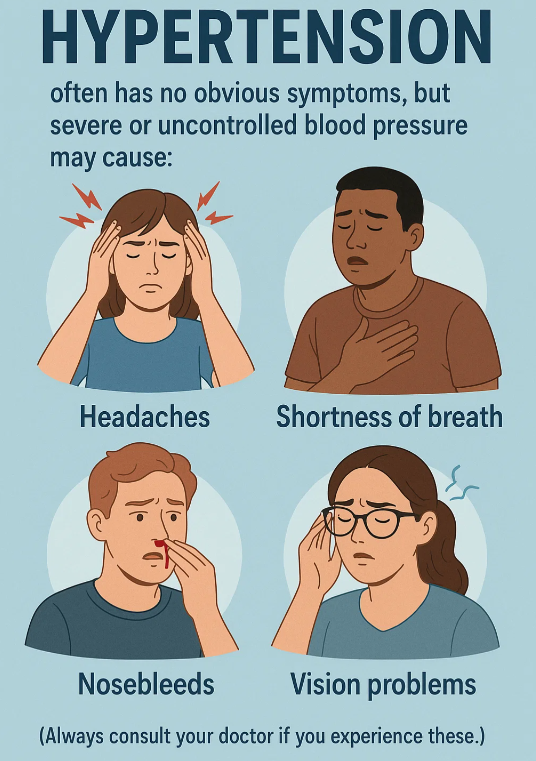
Hypertension often has no obvious symptoms, but severe or uncontrolled blood pressure may cause:

  • Headaches
  • Shortness of breath
  • Nosebleeds
  • Vision problems
(Always consult your doctor if you experience these.)

Diagnosis

High blood pressure is usually diagnosed with repeated checks over time and sometimes with additional testing.
  • Blood pressure measured during office visits or at home.
  • Multiple readings over time confirm diagnosis.
  • Additional tests may check for kidney damage, heart health, or underlying causes.

High Blood Pressure Risks

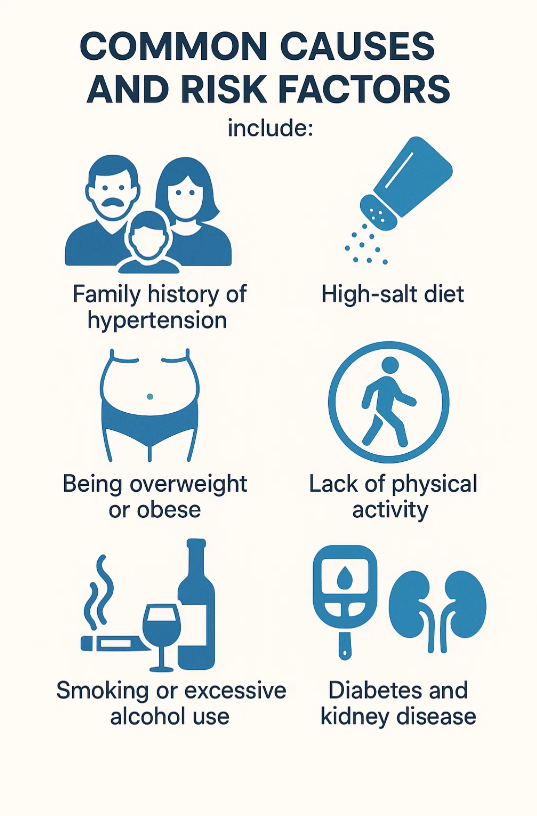
These are common factors that can make blood pressure go up
  • Family history — If close relatives have high blood pressure, your chances are higher too.
  • Too much salt — Eating lots of salty foods (chips, processed meals, fast food) can raise blood pressure.
  • Extra weight — Being overweight or obese puts extra strain on your heart and blood vessels.
  • Not moving enough — Sitting most of the day and not getting regular exercise can raise blood pressure.
  • Smoking or heavy drinking — Both can damage blood vessels and increase your risk.
  • Other health problems — Conditions like diabetes and kidney disease often go hand-in-hand with high blood pressure.

Treatment & Management

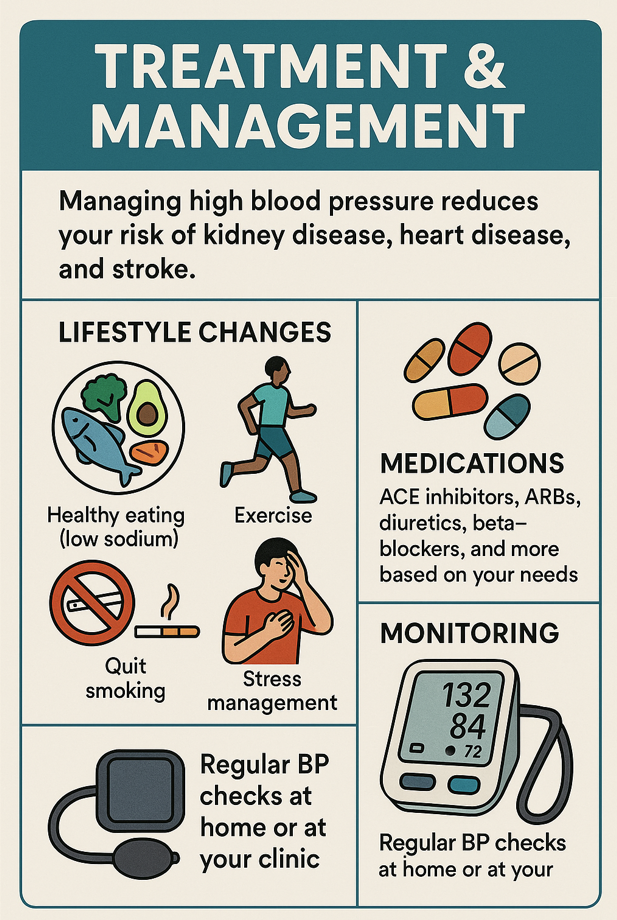
Managing high blood pressure reduces your risk of kidney disease, heart disease, and stroke.

  • Lifestyle changes: Healthy eating (low sodium), exercise, weight loss, quit smoking, stress management.
  • Medications: ACE inhibitors, ARBs, diuretics, beta-blockers, and more based on your needs.
  • Monitoring: Regular BP checks at home or at your clinic.

When to See a Doctor

Seek immediate care if:

  • Blood pressure is consistently over 180/120 (hypertensive crisis).
  • You experience chest pain, severe headache, vision changes, or confusion.

Disclaimer: This information is educational and not a substitute for professional medical advice. Always follow your clinician’s guidance.