Your Kidney Health Hub
Everything you need to understand, manage, and improve your kidney health in one place.
Why Healthy Kidneys Matter
Your kidneys are two bean-shaped organs that quietly keep your body in balance. They filter waste and extra fluid from your blood, help control blood pressure, produce hormones that support red blood cell production, and keep bones strong by activating vitamin D.
Healthy kidneys also help regulate electrolytes like sodium and potassium, which are essential for nerve and muscle function. They maintain the right balance of acids and fluids in your body, which is crucial for overall health.
However, kidney disease often develops silently, without noticeable symptoms in the early stages. By the time symptoms appear, significant damage may have already occurred.
That’s why regular checkups, blood pressure control, and healthy habits—like staying hydrated, eating a balanced diet, and avoiding excessive use of medications that can harm the kidneys—are your best protection.
-
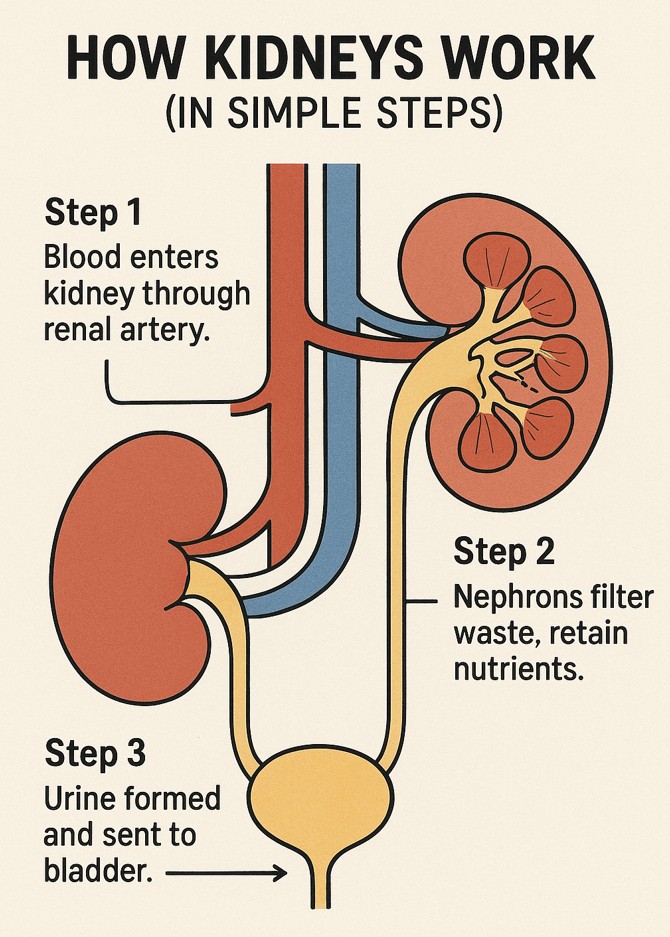
Step 1 – Blood enters the kidney through the renal artery
Think of your kidney as a filter system. Blood carrying both nutrients and waste products flows into the kidney through a large blood vessel called the renal artery.
-
Step 2 – Nephrons filter waste and keep what the body needs
Inside the kidney are millions of tiny filters called nephrons. These work like strainers: they pull out waste, extra water, and toxins, while making sure helpful things like nutrients, minerals, and proteins stay in your blood.
-
Step 3 – Urine is formed and sent to the bladder
The waste and extra fluid collected by the nephrons are turned into urine. The urine then travels down small tubes into the bladder, where it’s stored until you’re ready to go to the bathroom.
Conditions & Treatments

CKD
Learn about chronic kidney disease, its stages, and care options

Kidney Stones
Find causes, symptoms, and treatment for kidney stones.

Transplant
Learn about kidney transplant evaluation and recovery.

Hypertension
Understand how high blood pressure affects your kidneys.

Dialysis
See how dialysis works and when it’s needed.
Resources from Around the Web:
News
American Kidney Fund
New Survey Reveals Misconceptions and Urgent Gaps in Public Understanding of Kidney Disease
Heart.org
Deaths from high blood pressure-related kidney disease up nearly 50% in the past 25 years
National Kidney Foundation
Strength in Sharing: “There’s Power in Telling Your Kidney Story.”
Health Tracking
-
American Heart Association – "My Blood Pressure Log
A simple, printable daily log to record blood pressure readings and follow best-practice tips.
-
CDC – "My Blood Pressure Log"
A structured, printable log from the CDC’s heart disease resources to help you record readings consistently.
-
AMA – "7-Day Blood Pressure Recording Log
A weekly tracking sheet designed to help you and your care team spot patterns in your blood pressure.
Nutrition
-
Heart-Healthy & Kidney-Friendly Diet Guide (DaVita)
A dual-purpose free PDF to support both heart and kidney health with practical food-choice guidance:
-
Healthy Eating for People with Diabetes & Kidney Disease (AHS)
A kidney-friendly guide tailored for those managing diabetes—focused on blood sugar control, kidney protection, and heart health.
-
A Week with the DASH Eating Plan (NHLBI)
A practical, heart-healthy menu plan designed to help lower blood pressure with balanced meals and smart sodium limits.
Education & Self-Care Tools
-
Information Links
We’ve gathered a collection of leading organizations dedicated to kidney health, patient support, education, and research. Whether you're living with kidney disease, caring for someone who is, or simply looking to learn more, these trusted sources offer valuable information, tools, and community support.
Disclaimer: The links and downloadable documents provided on this site are for educational purposes only. All external resources remain the property of their original authors or organizations, as noted in the file names or descriptions. We do not claim ownership of these materials, nor are we responsible for their content, accuracy, or updates. Always consult your doctor or healthcare provider before making medical decisions or changes to your treatment, diet, or lifestyle.

